Today Gordon Stables’ name is recognised only by a small band of enthusiasts for late-Victorian and Edwardian adventure yarns, and by caravanners who know something of the history of their pastime. But in the 1890s and 1900s Stables was one of the most visible men in England, an enormously popular author, a journalist whose syndicated health advice was published in over 100 local and provincial newspapers, and a man whose name and pithy endorsements were used by over 100 companies in their promotional campaigns.
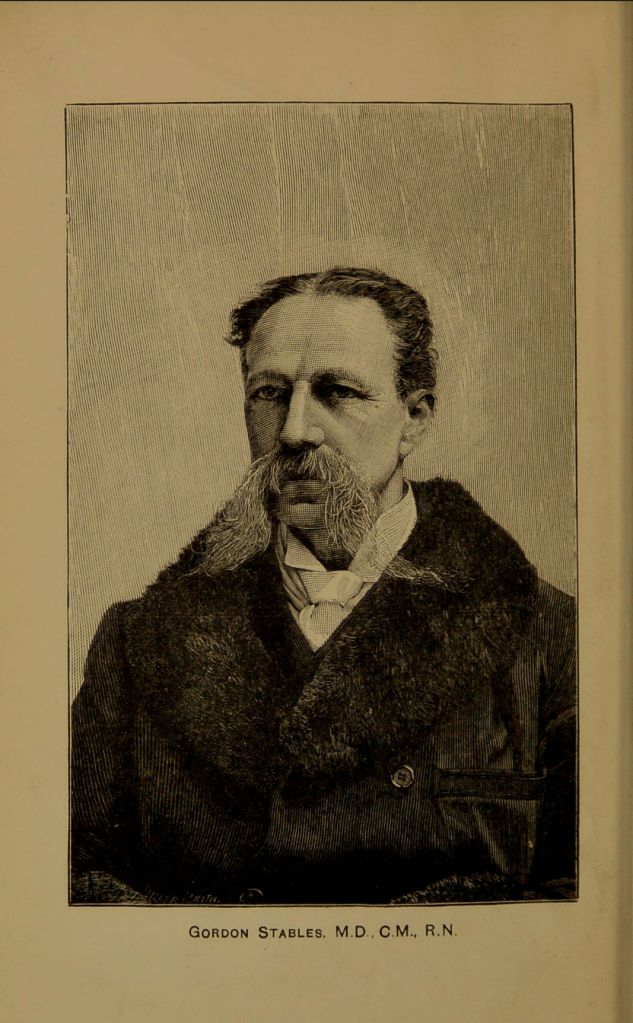
Like many Victorian jobbing writers Stables’ output was remarkable much more for its quantity (he wrote something like 150 books in a forty year career, at the height of which he was publishing four or five a year, alongside his weekly column) than its quality. But his popularity and longevity demonstrate that his ideas resonated with many late Victorians and Edwardians, happy to indulge in his imperial escapism, or anxious for his advice on how to deal with the common trials of late-nineteenth century life, biliousness, nervousness, feeling run-down.
The story of how Stables went from modest beginnings in Aberdeenshire, through medical studies, the harsh life of a north Atlantic sealer, Royal Navy slave-trading patrols off the East African coast, to discharge on the grounds of ill-health, a spell as dog fancier and breeder, to health ‘guru’, media ‘influencer’, and pre-digital nomad, tells us much about the ways in which the Victorians had already by the 1890s created the conditions and the practices of what we often think of as 21st century modernity. And Stables’ incesssantly autobiographical approach to writing provides the raw materials to uncover his life in ways usually only available for the literary elite.
 Martin Hewitt